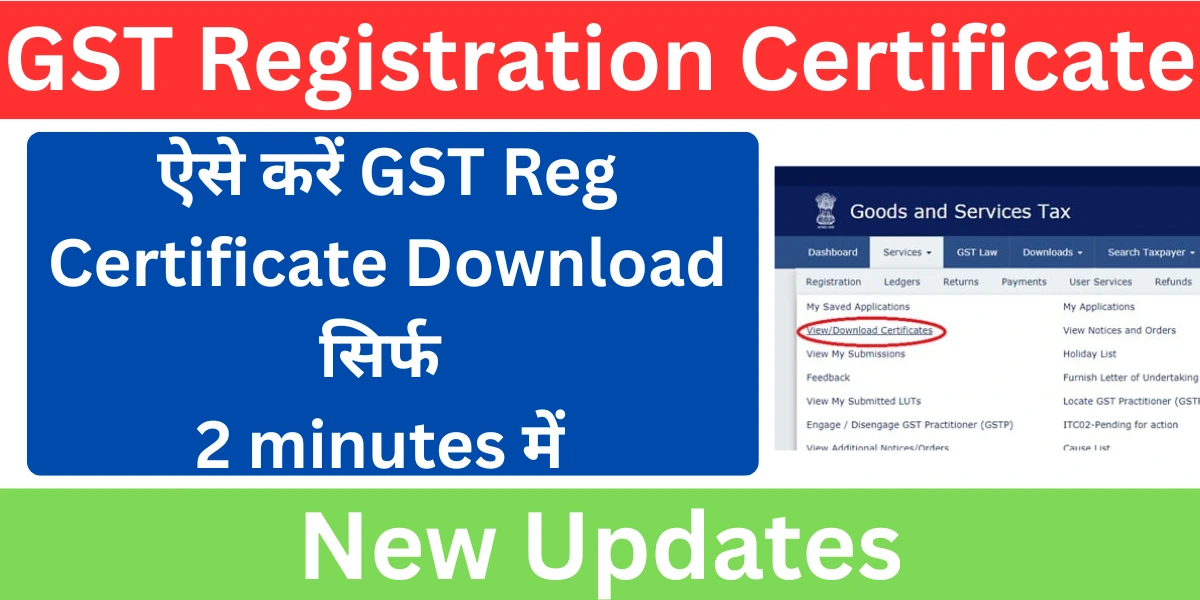
A GST Registration Certificate is an official document issued to taxpayers registered under the Goods and Services Tax (GST). It serves as proof of registration and contains important details like GSTIN, legal name, and business information. You can apply for GST registration online through the official GST portal by submitting the required documents and details.
Once registered, you can download the GST Registration Certificate (Form GST REG-06) directly from the portal. The certificate is available only in digital format, and the government does not provide a physical copy. It remains valid as long as the GST registration is active.
Understanding the GST Registration Certificate
A GST Registration Certificate is an official document issued by the government to a taxpayer registered under GST. It contains important details like the taxpayer’s name, GSTIN, and registration date. The certificate serves as proof of registration and is mandatory for conducting GST-compliant business.
Available only online on the GST portal, it is not issued in physical form. Regular taxpayers have a valid certificate as long as their registration is active, while casual taxpayers have a limited validity period.
This registration certificate applies to different types of taxpayers, including:
- Regular taxpayers
- TDS and TCS applicants under GST
- People who must get a Unique Identity Number (UIN) under Section 25(9) of the CGST Act
- Non-resident taxpayers, including those offering OIDAR services
- Taxpayers who shifted from the old tax laws before GST was introduced.
Complete Guide to Download GST Certificate
Below is the step-by-step process to download the GST Registration Certificate in Form GST REG-06
1. Log in to the GST Portal.
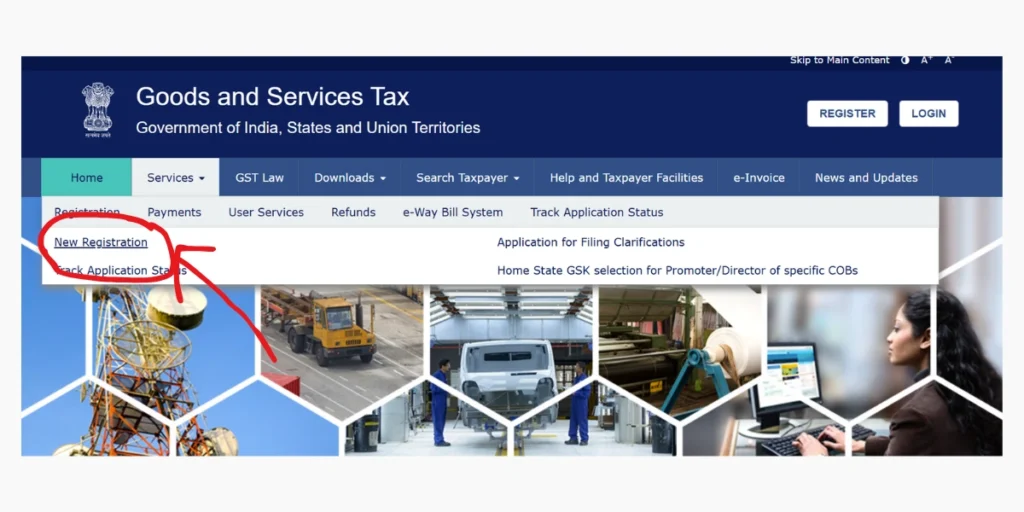
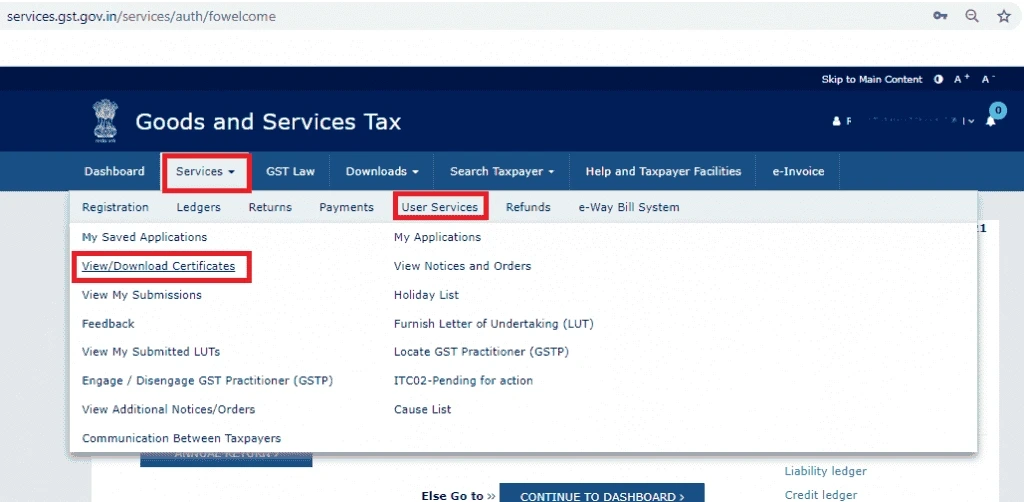
2. Go to ‘Services’ > ‘User Services’ > ‘View/ Download Certificate.
3. Click on the ‘Download’ icon.
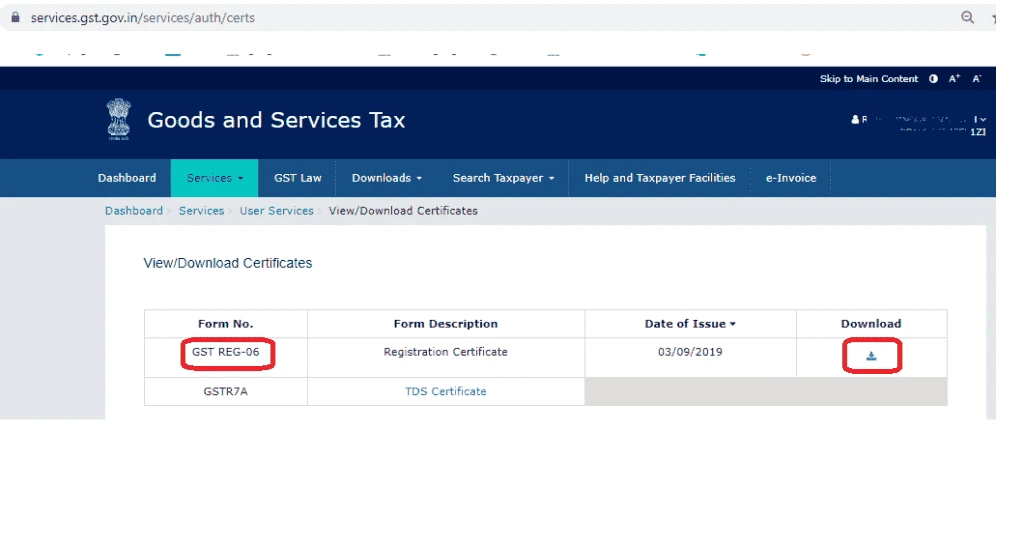
4. Open the downloaded PDF document and take a printout.
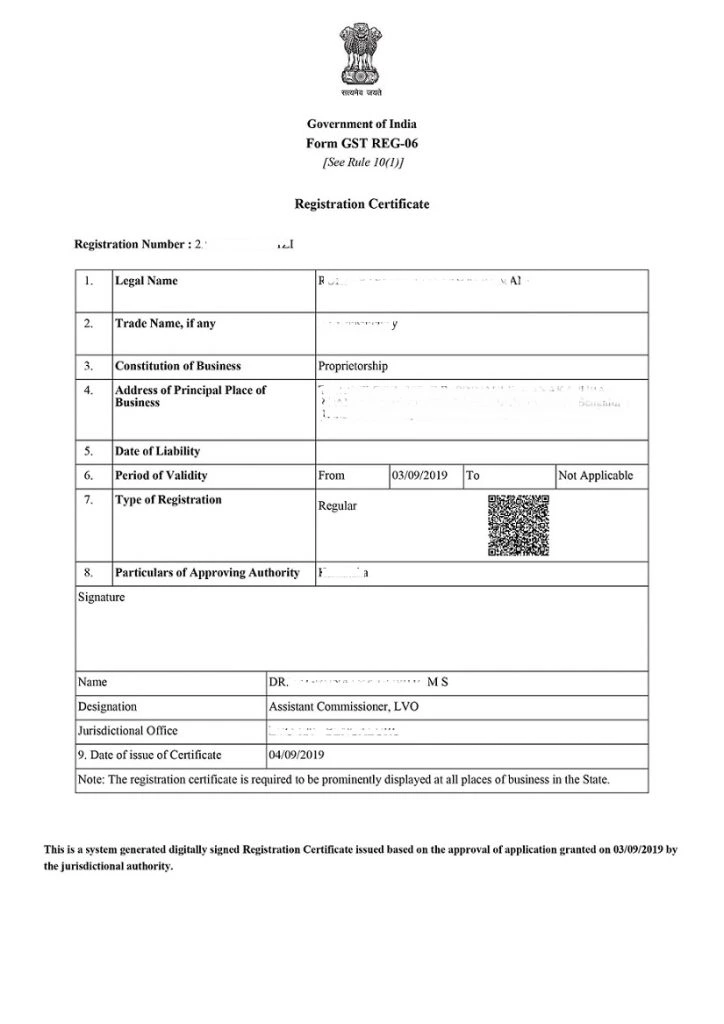
5. Display the printed certificate prominently at all your places of business in the State or UT.
Also Read: Mahila Samman Yojana
Duration of GST Registration Certificate
- The GST registration certificate becomes effective from the date a person is required to register, provided they apply within 30 days. If the application is made after 30 days, the certificate is valid from the date of issue, as per CGST Rules 9(1), 9(3), and 9(5).
- If the delay is caused by the officer under Rule 9(5), the signed certificate must be issued within three working days after the allowed period.
- For regular taxpayers, the certificate does not expire and remains valid as long as the GST registration is active and not cancelled or surrendered.
- For casual taxable persons, GST registration is valid for up to 90 days. It can be extended or renewed before expiration to maintain validity.
Details Included in a GST Registration Certificate
The main GST Registration Certificate includes:
- GSTIN (Goods and Services Tax Identification Number) of the taxpayer
- Legal Name and Trade Name of the business
- Business Type (such as Partnership, Company, Proprietorship, Trust, etc.)
- Main Business Address
- Date when GST liability began
- Validity Period: The certificate usually mentions a “From” date. Regular taxpayers do not have a “To” date, whereas casual or non-resident taxpayers will have a “To” date.
The following details are listed in Annexure-A:
- GSTIN (Goods and Services Tax Identification Number)
- Legal Name of the business
- Trade Name (if available)
- Extra Places of Business
The following details are listed in Annexure-B:
GSTIN
Legal Name
Trade Name (if applicable)
Information about the owner, partners, Karta, managing director, whole-time director, or board of trustees. This includes their photo, name, designation or position, and the state they live in.
How to Amend Your GST Registration Information?
To update details in your GST Registration Certificate, first identify whether the information is a core field or a non-core field. Then, log in to the GST portal and navigate to Services > Registration. Choose Amendment of Registration – Core Fields or Amendment of Registration – Non-Core Fields, based on what you need to change. You can add, update, or remove details and upload any required documents. Finally, save your changes and verify them using an authorised signatory with DSC, e-Signature, or EVC.
What Details Can Be Updated in GST Registration?
In GST registration, some details can be changed, but there are two types of fields: core and non-core.
Core fields are key details that require approval from a tax officer before any changes can be made. They include:
- Business name (legal name), provided the PAN remains the same
- Primary and additional business addresses, unless there is a change in the State
- Adding or removing stakeholders such as promoters, partners, Karta, Managing Committee members, or the CEO
Non-core fields are less critical and can be updated without verification. These include:
- Bank details
- General business information
- Description of goods and services।
- State-specific information (as long as the State itself doesn’t change)
- Authorised signatories or representatives
- Changes to existing stakeholders’ details (promoters, partners, Karta)
- Minor updates to principal and additional business locations
How to Download GST Certificate: Common Issues and Solutions?
Forgotten Login Details – If you forget your username or password, visit the login page and click on ‘Forgot Username’ or ‘Forgot Password’. Follow the instructions to verify your identity and recover your username or reset your password. Once done, you can log in and download your GST certificate.
Incorrect GSTIN – Sometimes, entering the wrong GSTIN can prevent you from downloading your certificate. Always double-check and enter the correct GSTIN to access your GST registration certificate successfully.
Technical Issues – The GST portal may occasionally experience technical problems or downtime. If this happens, try again later or contact the GST helpdesk for assistance.
GST Certificate for Any Type of Business
Most of the information on a GST certificate is the same for all taxpayers. But some details may differ depending on the type of taxpayer. Here’s a breakdown:
1. Regular or Normal Taxpayers
Regular taxpayers receive a GST certificate that contains their basic registration details. This certificate allows them to claim input tax credit.
2. Composition Taxable Persons
Small businesses registered under the composition scheme must keep and display their GST certificate. It indicates that they are composition taxpayers, do not charge GST from customers, and cannot claim input tax credit.
3. Casual Taxable Persons
Taxpayers who make occasional or temporary taxable supplies, such as at exhibitions, can register as casual taxable persons. They must also obtain a GST certificate from the GST portal.
4. Non-Resident Taxable Persons
Non-resident businesses operating temporarily in India are required to register under GST. They must display their GSTIN at their office and keep the GST certificate, which shows their place of business.
Frequently Asked Questions (FAQs)
To download your GST certificate, log in to the GST portal, go to “Services” → “Certificates” → “View/Download,” select your registration, and download the PDF.
You can get a GST number by applying online on the GST portal, submitting business details, uploading documents, completing verification, and receiving the GSTIN after approval.
Log in to the GST portal, go to Services > User Services > View/Download Certificates, select Registration Certificate, and click Download to save your GST certificate.
New GST rates become applicable from the date notified in the Official Gazette after the GST Council approves the changes in its meeting and issues a notification.